
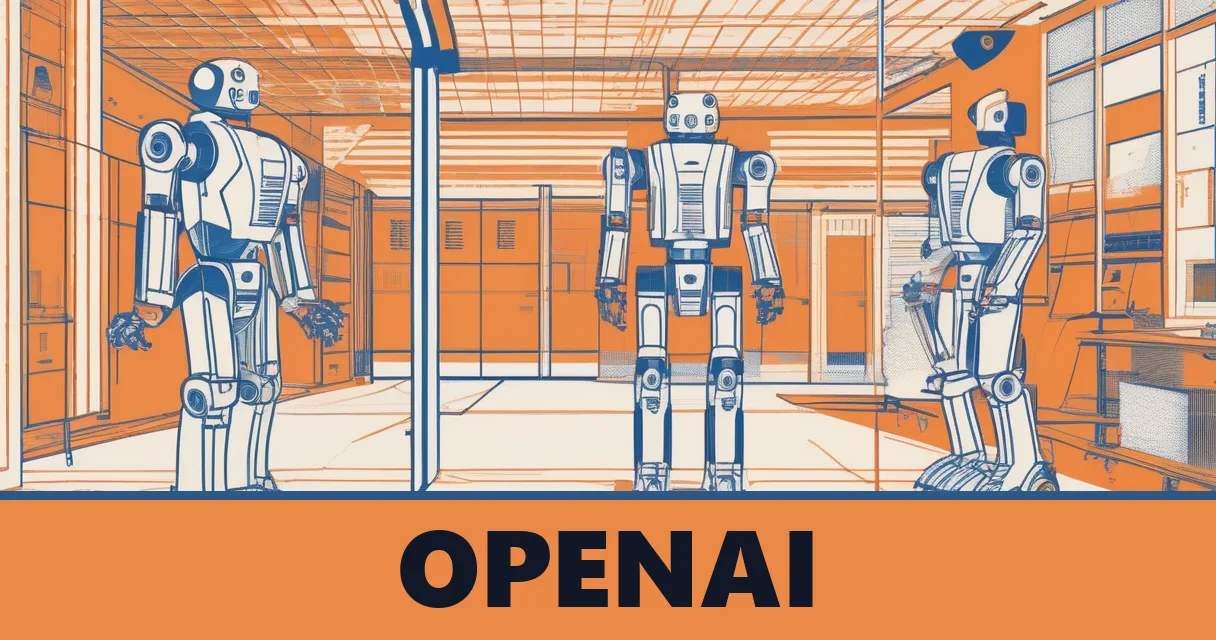
OpenAI folds standalone robotics team into broader research divisions
The AI giant is moving its robotics experts into general AI teams, signaling a belief that general models can now handle physical tasks without specialized systems.
The short version
- OpenAI is moving robotics researchers into the main research team led by Mark Chen and the Applied division led by Greg Brockman.
- The company previously shut down its original robotics division in 2020 due to limited robot data and a preference for training large language models.
- OpenAI believes its latest models, like GPT-6 Astra, can now handle robotics tasks directly rather than requiring specialized AI systems.
- CEO Sam Altman has set a target of 2027 for a first public demonstration of a humanoid robot developed by the company.
- The move comes as OpenAI faces pressure to cut costs and focus on core products following heavy operating losses of $10.9 billion last quarter.
Why it matters
This shift suggests that the 'brain' of a robot may soon be a standard AI model rather than a unique piece of software. For the industry, it means the barrier between digital intelligence and physical action is shrinking, potentially making robotics a downstream application of general AI.
A shift in organizational structure
OpenAI has decided to dissolve its independent robotics unit for the second time in six years. This reorganization moves the company's robotics experts into the broader research and applied organizations instead of keeping them in a separate group. The change was confirmed by the company when contacted by Fortune.
As part of this new structure, robotics researchers will be reassigned to the main research team headed by chief research officer Mark Chen. Meanwhile, the hardware and applied robotics teams will function under the broader Applied division led by president Greg Brockman. This move signals a change in how the company views the development of physical machines.
While some might see this as a retreat, OpenAI insists it is a commitment to bringing general-purpose robots into the world. The company argues that the new structure allows for a more integrated approach to development. By folding these teams into the main research body, the company aims to leverage its core AI advancements more directly for robotics.
The history of robotics at OpenAI
This is not the first time OpenAI has restructured its robotics efforts. The company originally had a robotics team in its early days but chose to wind it down in 2020. At that time, co-founder Wojciech Zaremba noted that there was limited robot data available for training. He suggested that training very large language models provided a more efficient path toward artificial general intelligence.
That strategy eventually led to the creation of ChatGPT in late 2022. After the 2020 shutdown, OpenAI rebuilt a standalone robotics team in 2024. This new team initially announced a partnership with Figure to develop AI models specifically for humanoid robots. However, that partnership ended in February 2025 when Figure decided to build its own robot AI.
Despite the dissolution of the standalone unit, OpenAI is still actively developing its own humanoid robot. CEO Sam Altman has publicly targeted 2027 for the first public demonstration of this technology. The company is now attempting to find the most effective way to integrate these goals into its existing research pipeline.
Why general models are enough
OpenAI's decision reflects a growing conviction that high-level, versatile AI systems are now sophisticated enough to manage robotic duties. The company suggests that these models no longer require specialized, robotics-focused AI systems to function. This shift is based on the discovery that frontier models can now understand and interact with the physical world effectively.
The company previously believed that progress in robotics would stem from technologies developed for projects like Sora, its video-generation model. Sora was designed to understand physical-world interactions to generate realistic videos. OpenAI now believes that its latest frontier models, including GPT-6 Astra, have demonstrated capabilities that can be applied directly to robots.
Experts are divided on whether this approach is sufficient for the long term. Guanya Shi, an assistant professor at Carnegie Mellon University, suggests that robotics is no longer a special problem but a downstream application of general intelligence. He notes that general models can already handle tasks like coping with a bottle in different positions or varying lighting conditions.
The data and cost challenges
While general models are powerful, some experts argue that specialized robotics companies still hold a significant advantage. Russ Tedrake, an MIT professor and CEO of Walden Robotics, points out that robotics companies gain experience in real places like factory floors. This real-world deployment data allows robots to adapt to specific environments and tasks in ways that general AI labs might lack.
Furthermore, there is a technical need for smaller specialized models that can run on a robot's onboard computer. These models are necessary for robots to function without a constant internet connection. Pete Florence of the startup Generalist notes that it is unclear which model type will ultimately dominate the robotics field as intelligence grows.
OpenAI is also facing significant financial pressure to streamline its operations and focus on core products. Last year, Sam Altman instructed the company to abandon "side quests" to free up computing resources, leading to the dropping of some efforts like Sora. The company is currently managing heavy operating losses of $10.9 billion as it seeks new funding and prepares for a possible IPO in 2027.
What to watch
- Whether OpenAI successfully produces a humanoid robot demonstration by 2027.
- How the integration of robotics into the main research team affects the speed of development compared to the standalone unit.
- If specialized robotics startups can maintain their lead using site-specific data from factories and warehouses.
Try it
Look up the current capabilities of GPT-6 Astra to see how it handles physical-world interaction descriptions.
Sources and links
Liked it? Say why
Add a line for other readers.
No account needed. We never show your email. Comments with links, ads or abuse are held and not shown. Your comment shows after a quick check.
Listen to the AI Wire headlines
Listen to the AI WireListen to our daily AI shows every morning: on your commute, in the shower, wherever you are
Listen to the daily showsFirst reported by The Times of India · Read the original. Written by the SI Agent News Desk from the reporting above.Written with AI from the source above. Every number is checked against the source. Spot a mistake? Corrections.