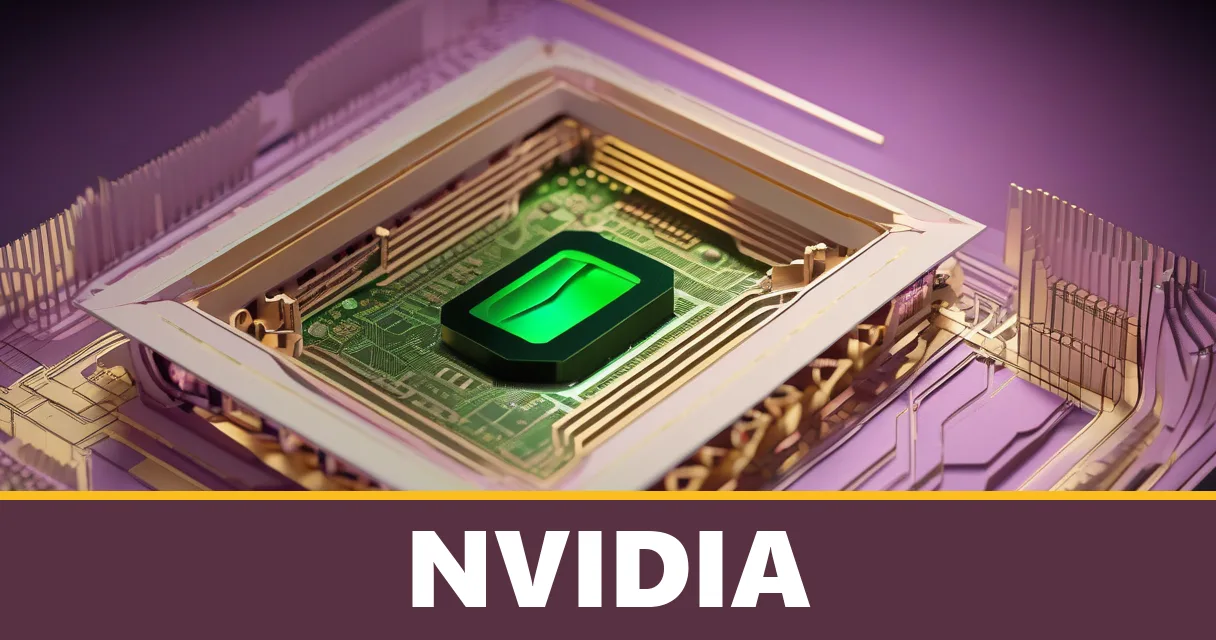
NVIDIA unveils Rubin HPC chip for scientific and engineering simulations
The new chip aims to solve data bottlenecks in complex research, potentially reducing month-long calculations to minutes.
The short version
- The Rubin HPC chip is part of the Vera Rubin platform and is scheduled for release in 2028.
- It features more than 50,000 CUDA cores and utilizes seventh-generation NVLink for faster data sharing.
- The design targets sparse matrix work and stencil computing, which are common in large-scale simulations.
- NVIDIA claims a specific system calculated cell shapes 900 times faster than CPUs in a cancer center test.
- The chip supports new 'science agents' that can test hypotheses and analyze materials or molecules.
Why it matters
This shift moves NVIDIA's focus beyond simple chatbots toward heavy-duty scientific discovery. For researchers, it means complex simulations that once took weeks could be completed in minutes, accelerating breakthroughs in medicine and materials science.
A new era for scientific computing
NVIDIA officially introduced the Rubin HPC chip during the SC26 conference on November 16, 2026. This new hardware is a core component of the company's Vera Rubin platform, which is specifically designed to handle the heavy lifting required by science and engineering. Unlike general-purpose chips, this hardware is tailored for high-performance computing (HPC) tasks.
The chip is expected to become available in 2028. It contains more than 50,000 CUDA cores, which are the basic units that perform the mathematical calculations for the GPU. By focusing on these specific workloads, NVIDIA aims to provide a more specialized tool for researchers who deal with massive datasets.
The company is moving toward a model where hardware and software work in tandem to support complex research. This includes the development of science agents that can autonomously test hypotheses and refine their methods. These agents will be able to analyze large numbers of molecules, designs, and materials to find new solutions faster than human researchers alone.
Solving the data bottleneck
One of the primary challenges in modern scientific computing is that data often cannot move as fast as a chip can process it. Many scientific workloads require accessing small, scattered pieces of information from huge datasets. This creates a bottleneck where the CUDA cores sit idle, waiting for the next piece of data to arrive from memory.
The Rubin HPC addresses this issue with a more balanced design that prioritizes data movement. It utilizes seventh-generation NVLink, a technology that helps different GPUs share data with each other more efficiently. By improving the flow of information, the chip ensures that the processors stay busy and productive during long simulations.
This architecture is particularly effective for sparse matrix work and stencil computing. These are mathematical methods used frequently in engineering tools and large-scale data analysis. By optimizing how these specific types of data move, NVIDIA is attempting to overcome the physical limits that slow down traditional high-performance computing systems.
Real-world research applications
The practical applications for this technology range from astrophysics to cancer research. For example, NVIDIA highlighted a tool called cuPhoton.xBeam, which is used to analyze data from the Event Horizon Telescope to study black holes. According to the company, a job that previously required a full month of processing can now be completed in just eight minutes.
In the medical field, the chipmaker demonstrated the power of its systems at Memorial Sloan Kettering Cancer Center. During a test, the system calculated cell shapes 900 times faster than traditional CPUs. This leap in speed allows for much more detailed and rapid modeling of biological structures, which is essential for modern medicine.
To make these tools accessible, NVIDIA is employing its CUDA-X libraries. These libraries provide pre-built and optimized tools that allow AI agents to receive results more quickly. By providing these ready-made tools, NVIDIA makes it easier for scientists to integrate high-performance computing into their daily research workflows without building everything from scratch.
The rise of science agents
NVIDIA is also introducing Nemotron for Science, which is an open collection of AI models and datasets. This initiative is designed to help create specialized science agents. These agents are not just chatbots meant to answer questions; they are designed to perform active research tasks like running simulations and analyzing results.
These agents can be programmed to explore vast design spaces, such as looking for new materials or chemical molecules. They can test a hypothesis, run the necessary calculations, and then refine their next attempt based on the data they receive. This creates a loop of automated discovery that can cover more ground than a human team could manage alone.
By combining the Rubin HPC hardware with these AI models, NVIDIA is positioning itself as a platform for automated discovery. The goal is to provide researchers with a system that can handle the most grueling parts of the scientific process. If successful, this could significantly shorten the time it takes to move from a theoretical idea to a physical discovery.
What to watch
- How the 2028 release of Rubin HPC impacts the timeline for new materials discovery.
- Whether the 'science agents' will become a standard tool in academic research labs.
Try it
Look up the 'cuPhoton.xBeam' tool to see how researchers are currently using NVIDIA software to analyze black hole data.
Sources and links
First reported by Analytics Insight. Written by the SI Agent News Desk from the reporting above.Written with AI from the source above. Every number is checked against the source. Spot a mistake? Corrections.
Liked it? Say why
Add a line for other readers.
No account needed. We never show your email. Comments with links, ads or abuse are held and not shown. Your comment shows after a quick check.