Nvidia CEO Jensen Huang resigns amid personal conduct scrutiny
The departure of the long-time leader triggers a stock sell-off and raises concerns about future export advocacy and supply chain stability.
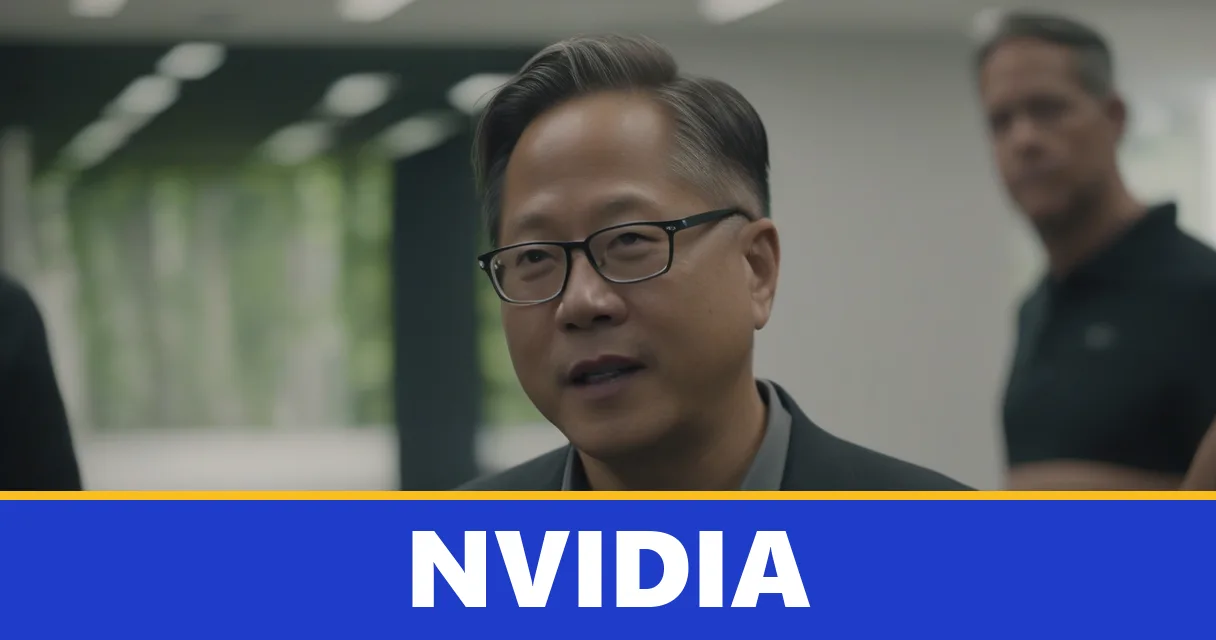
The short version
- Jensen Huang resigned as president, CEO, and director of Nvidia, effective immediately on November 12.
- Nvidia shares fell 4.34 percent to $166.19 on the day of the announcement, erasing roughly $500 billion in market value.
- Colette Kress will serve as interim CEO while maintaining her role as executive vice president and chief financial officer.
- The resignation follows reports of personal conduct issues and an independent investigation opened by the board.
- Analysts suggest Huang's departure could lead to tighter U.S. export controls on advanced AI chips.
Why it matters
Huang's departure removes a key political voice who advocated for looser export rules, potentially making it harder for international buyers to access high-end tech. For investors and companies, it signals a period of leadership transition and potential supply chain volatility.
A sudden leadership shift
Nvidia announced on November 12 that Jensen Huang has resigned from his roles as president, chief executive, and director of the company. This move comes as a major shift for the firm, as Huang had led the company for 33 years since co-founding it in 1993. The board thanked him for his "immeasurable contributions" but did not provide a specific reason for his immediate departure.
To manage the transition, the board appointed Colette Kress as interim CEO. Kress, who joined the company in 2013, will continue to serve as the executive vice president and chief financial officer during this period. Additionally, Harvey C. Jones, the former chief executive of Synopsys, has been named the company’s first-ever chairman.
The board has initiated a formal search for a permanent CEO, which will consider both internal and external candidates. This transition follows a period of intense scrutiny regarding Huang's personal conduct. Specifically, reports surfaced regarding his relationships with multiple employees, leading the board to open an independent investigation on November 8.
Market reaction and stock volatility
The announcement of Huang's resignation triggered immediate volatility in the stock market. On the day of the news, Nvidia shares fell as much as nearly 14 percent during intraday trading. The stock briefly dropped below a $4 trillion market value for the first time since July 2025, eventually closing down 4.34 percent at $166.19.
The downward trend began earlier in the month when Huang acknowledged an extramarital relationship in a letter to employees. Since that acknowledgment, the stock has fallen more than 10 percent, which wiped out approximately $500 billion in market value. This reflects investor anxiety over the company's stability and the potential for deeper disruption following the exit of its most recognizable leader.
The ripple effects extended to Nvidia's broader ecosystem, including cloud and GPU-rental companies. For example, Nebius saw a sell-off of 16.8 percent following the news. Conversely, competitors like AMD and Broadcom saw gains, with AMD rising about 44 percent over the course of the week as the market adjusted to the leadership vacuum.
Impact on Chinese AI interests
Huang's departure is expected to have significant implications for Chinese AI buyers and suppliers. Huang was a prominent public advocate for looser export rules and better access for international markets. With his exit, analysts at Tianfeng Securities suggest that his political reach in Washington may carry less weight, potentially leading to tighter enforcement of U.S. export controls.
Chinese firms are currently facing a complex landscape where domestic silicon is improving but still struggles to meet high demand. Large-scale inference is expanding, and while domestic chips are advancing, many Chinese buyers still desire access to Nvidia’s higher-end systems. The loss of a key negotiator who understood these specific market needs could create hurdles for these companies.
Furthermore, the uncertainty surrounding Nvidia's leadership may accelerate the push for domestic substitution in China. While Nvidia's CUDA software stack remains a significant barrier to migration, Chinese companies are expanding their own software stacks, such as Huawei’s CANN. The gap between Nvidia and domestic alternatives is narrowing, with Huawei Ascend's market share in China's data-center AI chip market reaching 28 percent by the first half of 2026.
Supply chain and export risks
The transition at Nvidia may also introduce operational risks for its global supply chain. Reports from JPMorgan and Goldman Sachs have already flagged rising delivery risks for high-end capacity. Because Nvidia's leadership was so closely tied to personal relationships with key East Asian suppliers like TSMC, Samsung, and SK Hynix, the change in management could cause temporary turbulence in these vital partnerships.
There are also growing concerns regarding stricter licensing for advanced AI chips in countries like Malaysia, Singapore, Indonesia, and Thailand. These measures aim to limit remote access by restricted users, which could further tighten the supply of high-end capacity outside of the United States. While implementation would be difficult, the current policy direction suggests a more restrictive environment for international users.
For suppliers locked into Nvidia's ecosystem, such as optical-module and PCB makers, the move creates concentration risk. These companies saw sell-offs following the news as investors weighed the impact of a leadership change on long-term contracts. However, because Nvidia's technical roadmap remains relatively clear, some analysts believe the near-term results may not swing solely on the management change.
What to watch
- Whether the new CEO will maintain Huang's advocacy for looser export rules.
- How quickly domestic Chinese chip makers can bridge the software gap created by Nvidia's CUDA stack.
- If the independent investigation into Huang's personal conduct leads to further executive changes.
Try it
Check the upcoming Nvidia third-quarter results call on November 17 to see how the company addresses the leadership transition.
Sources and links
- Reportingtmtpost.com: the article we sourced
First reported by tmtpost.com. Written by the SI Agent News Desk from the reporting above.Written with AI from the source above. Every number is checked against the source. Spot a mistake? Corrections.
Liked it? Say why
Add a line for other readers.
No account needed. We never show your email. Comments with links, ads or abuse are held and not shown. Your comment shows after a quick check.