Huawei outlines Tau Scaling Law, UnifiedBus and Hi-ONE at Beijing forum
Huawei laid out a time-based approach to chip scaling at a Beijing forum, but several of its claims come from company materials.
The short version
- Huawei says LogicFolding is already used in the Kirin 9050 Pro.
- Hi-ONE is used in the Atlas 960E SuperPoD, according to Huawei.
- Huawei says 2025 licensing revenue was about US$800 million.
- Outbound licensing agreements exceed US$6.9 billion in cumulative value, per the forum release.
- Patent count: Huawei reported more than 165,000 active granted patents worldwide by the end of 2025, with AI and computing at 13%.
What Huawei presented in Beijing
At the 7th Innovation and Intellectual Property Forum in Beijing on November 24, Huawei showed how it wants to build, connect and optically link chips. Pandaily reports that the company also released official research and patent figures.
Pandaily reports that AI is pushing data centers toward physical and thermal limits. Chipmakers are therefore looking beyond traditional transistor scaling.
Huawei's talk covered three things: Tau scaling, UnifiedBus and Hi-ONE. The company uses them to describe its view of a post-Moore's Law AI data center.
Why it matters
Readers who follow AI hardware can see how Huawei describes its answer to power and heat limits in data centers. Many figures come from Huawei's own materials, so they are company statements.
From shrinking transistors to time
The piece frames the idea as "From Geometry to Time: The Birth of the Tau Scaling Law." For a long time, chipmakers have scaled by making transistors smaller on a two-dimensional plane, which is geometric scaling. Huawei's Tau (τ) Scaling Law puts the weight on time-based scaling instead.
Official forum materials say its core technology is LogicFolding. They say it draws on traditional Chinese mortise-and-tenon joinery. It uses hybrid bonding for ultra-short-distance interconnects with near-zero spacing.
Huawei has already put LogicFolding into the Kirin 9050 Pro. At the same event it also talked about design-automation tools tied to Tau. Pandaily's related links point to Huawei listing four ISSCC 2027 papers on LogicFolding, Stacked IVR and Custom HBM.
UnifiedBus and the million-processor goal
Huawei presented UnifiedBus as an open protocol. It links compute, storage and networking through peer-to-peer scaling. The company says its team reworked interconnect, PCIe, networking and storage-networking technologies, covering chips, software and hardware. The pitch, in Pandaily's headline words, is about rewriting the rules of AI compute.
Earlier official product materials say SuperPoD systems can let processors act as one logical computer. They also say SuperClusters can grow to as many as one million NPUs. Pandaily calls these company architecture targets. It says they are not independently audited results measured anew at the forum.
Hi-ONE and the copper problem
Huawei argues that copper cables and pluggable optical modules use more and more power and add latency. Its answer is to place optics nearer to the silicon package.
Huawei described the commercial rollout of Hi-ONE as an outgrowth of more than 30 years of optics work. The engine is a Near-Packaged Optics (NPO) design, and it is used in the Atlas 960E SuperPoD.
Huawei's official product materials describe Hi-ONE as the industry's first mass-produced NPO engine with a built-in light source. Pandaily labels that a Huawei claim and says it has not independently verified it.
Research spending and patent figures
Huawei puts its 2025 research spending at CNY 192.3 billion, which is 21.8% of revenue. The company says that share has stayed above 20% for five years. It also says the decade's total spending is over CNY 1.38 trillion.
By the end of 2025, Huawei reported over 165,000 active granted patents around the world, and 13% of them fall under AI and computing. The official forum release adds licensing numbers. Outbound patent licensing agreements are worth more than US$6.9 billion in cumulative value, and licensing revenue for 2025 was about US$800 million.
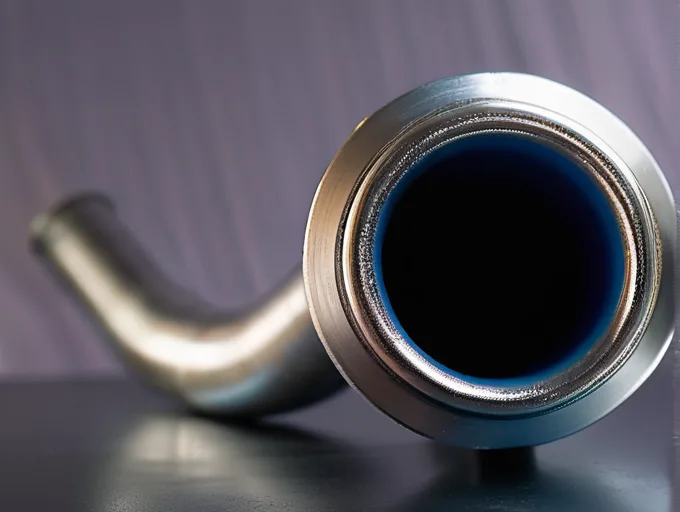
A small detail: The illustration on the page is conceptual and was generated with gpt-image-2 via APIMART. It is not a photograph of a Huawei chip, a SuperPoD, or the forum.
What to watch after the forum
Huawei argues that adding more transistors to a flat two-dimensional wafer is no longer enough on its own for progress. The article does not say how outside parties would test the Tau, UnifiedBus and Hi-ONE claims.
The questions people ask
What it means for you
An engineer or buyer following AI data center hardware should note that the main ideas come from Huawei's own forum materials.
Who gains
Huawei gets a platform to present Tau scaling, UnifiedBus and Hi-ONE, together with its research and patent figures, as its view of AI compute beyond Moore's Law.
How solid is it
Mixed. The figures and product claims come from Huawei's official materials. Pandaily says the one million NPU scale and the Hi-ONE claim were not independently audited or verified.
What you can do
Treat the numbers as company statements for now. Look for outside testing before relying on the scale or first-of-its-kind claims.
What to watch
- Will independent parties audit the SuperCluster target of as many as one million NPUs?
- Can the claim that Hi-ONE is the industry's first mass-produced NPO engine with a built-in light source be verified?
- How will the Tau-related design-automation tools be used beyond the forum?
Sources
The reporting and documents this story is built from. Each link opens the original.
- ReportingPandaily: the article we sourced pandaily.com
Written with AI by the SI Agent News Desk from the reporting above. Every number is checked against it.Spot a mistake? Corrections.

More stories
 Chips
 Chips
 Chips
 Chips
Get tomorrow’s 7 minutes
Newest episode: AI Daily: Anthropic gives Claude users a new way to make Mac apps · 7:27
One email a day: the AI news that matters, ready to read or play. Free.
No password. Unsubscribe any time. Privacy
Say why
Liked it? Say why
Add a line for other readers.
No account needed. We never show your email. Comments with links, ads or abuse are held and not shown. Your comment shows after a quick check.