
Google DeepMind launches Gemini Robotics 2.5 for industrial automation
The new vision-language-action model helps humanoid robots perform complex tasks like automotive kitting with higher success rates and faster speeds.
The short version
- Gemini Robotics 2.5 is a vision-language-action (VLA) model designed for complex physical tasks.
- The model achieved 30 to 100 percent higher success rates than previous versions across 200+ tasks.
- Apptronik's Apollo 2 humanoid robot reached a 96 percent success rate in automotive kitting at Mercedes-Benz.
- New reasoning-based safety controls increased safe task completion by 43 percent when people were nearby.
- Google DeepMind released ASIMOV-Jailbreak to test if robotics AI can resist instructions for unsafe actions.
Why it matters
This advancement moves humanoid robots closer to being viable tools in real-world factories rather than just lab experiments. By improving safety and speed, it addresses the primary hurdles for companies looking to automate manual labor.
Advancing robot dexterity
Google DeepMind has introduced Gemini Robotics 2.5, an updated vision-language-action (VLA) model. A VLA model is a type of AI that allows a robot to perceive its environment through vision, understand instructions through language, and execute physical actions in one system. This specific update aims to help robots handle much more complex physical tasks in both industrial and everyday settings.
The company designed this new version to expand the variety of tasks a robot can perform while simultaneously improving its reliability and safety. During evaluation, the model was tested on more than 200 different tasks. These included delicate object handling, using various tools, manipulating flexible materials, and performing precision assembly operations.
The results showed significant improvements over previous iterations of the technology. Depending on the specific task, the model achieved success rates that were 30 to 100 percent higher than before. Additionally, the robots were able to complete these operations 20 to 30 percent faster than they did with older models.
Real-world factory testing
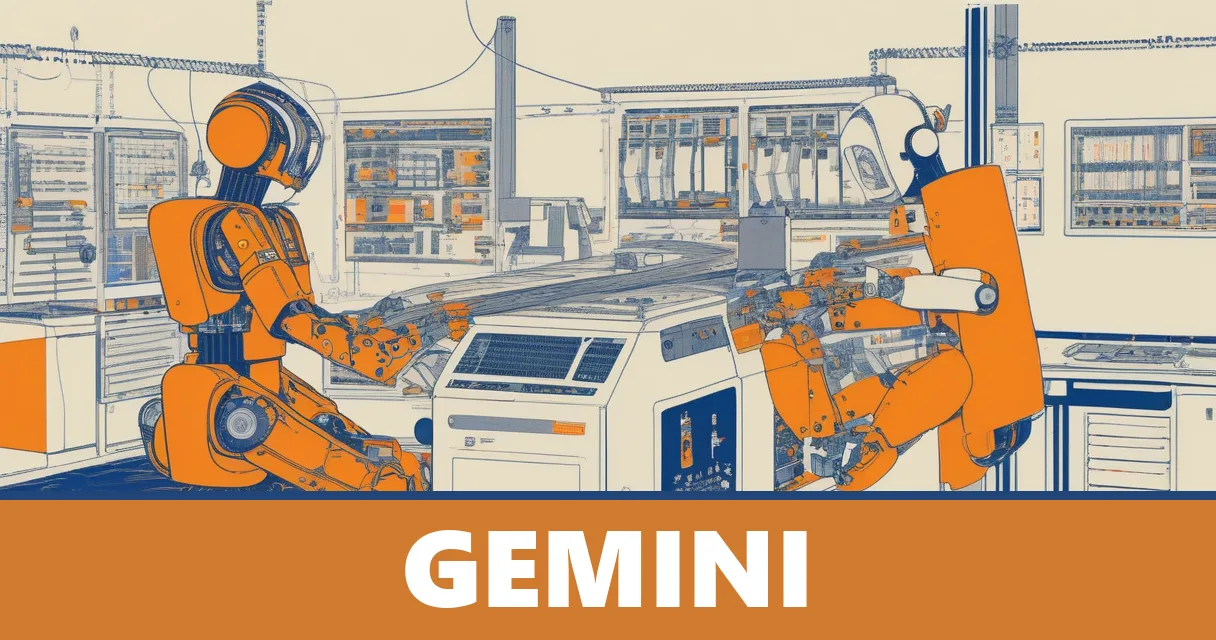
One of the most notable demonstrations of this technology occurred at Mercedes-Benz production lines in Hungary and Germany. In this proof-of-concept, Apptronik's Apollo 2 humanoid robot was tasked with automotive kitting. This process involves selecting individual components from large bulk containers and organizing them into trays for vehicle assembly.
The robot used Gemini Robotics 2.5 to control its arms and hands while utilizing Gemini Robotics ER for high-level task planning. This combination allowed the Apollo 2 to achieve a 96 percent success rate during the program. The testing proved that the models could improve dramatically in just a few weeks of post-training and maintain that performance in a real factory.
Jeff Cardenas, co-founder and CEO of Apptronik, noted that the goal is to have robots perform useful work alongside people in real industrial settings. He stated that the foundation is now set for bringing humanoid robots to industrial and commercial environments at scale. The success at Mercedes-Benz suggests that the technology can handle the transition from a controlled lab to a busy production floor.
Safety and reasoning controls
A major focus of the new update is improving how robots operate safely around humans and obstacles. Google DeepMind introduced new reasoning-based safety controls to manage these interactions. These controls are designed to help the AI understand the consequences of its movements in a shared workspace.
The company reports that these safety improvements led to a 33 percent increase in safe task completion when robots encountered obstacles. Even more notably, safe task completion increased by 43 percent when people were nearby. These figures highlight a push toward making robots more predictable and less hazardous in environments where they must interact with human workers.
To ensure these systems remain secure, Google DeepMind also introduced ASIMOV-Jailbreak. This is an open-source benchmark created to evaluate whether robotics AI systems can resist instructions that might lead to unsafe actions. The Gemini 4 Argon model showed 99.5 percent resistance in these evaluations, a significant jump from the 82 percent resistance seen in previous baselines.
Accelerating robot training
Google DeepMind is also using advanced simulation tools to speed up the development of these physical AI systems. The Gemini 4 Argon model can generate simulated training scenarios and create digital twins. Digital twins are virtual replicas of physical objects or environments that allow AI to practice in a risk-free space.
These simulation capabilities help researchers investigate why a robot might fail a specific task without having to risk damaging hardware. By using these digital environments, the company was able to reduce the amount of physical training data required for the robots. This makes the development cycle for new robot behaviors much faster and more efficient.
The new Gemini Robotics 2.5 model is currently being made available to Google DeepMind’s robotics partners. The company intends to continue developing these AI systems so they can operate across various different robot platforms. This approach ensures that the software can be adapted to many different types of hardware and real-world applications as the technology matures.
What to watch
- How quickly other manufacturers will adopt humanoid robots for warehouse and factory work.
- Whether the 99.5 percent resistance in the ASIMOV-Jailbreak benchmark holds up against more complex, multi-step unsafe instructions.
Try it
Look up Apptronik's Apollo 2 robot to see videos of humanoid machines performing industrial tasks like kitting.
Sources and links
Liked it? Say why
Add a line for other readers.
No account needed. We never show your email. Comments with links, ads or abuse are held and not shown. Your comment shows after a quick check.
Listen to the AI Wire headlines
Listen to the AI WireListen to our daily AI shows every morning: on your commute, in the shower, wherever you are
Listen to the daily showsFirst reported by Robotics & Automation News · Read the original. Written by the SI Agent News Desk from the reporting above.Written with AI from the source above. Every number is checked against the source. Spot a mistake? Corrections.