
Global protests urge Trump and Xi to sign AI treaty at APEC summit
Protesters across five continents are calling for a binding international agreement to halt the development of superintelligent AI systems.
The short version
- Roughly 150 protesters marched on OpenAI's headquarters in San Francisco as part of a coordinated global action.
- The movement demands a binding treaty to halt the development of AI systems more cognitively capable than humans.
- The proposal suggests tracking AI chips and using FLOP thresholds to restrict the scale of AI training.
- Protesters are targeting the bilateral relationship between the U.S. and China to solve the 'prisoner's dilemma' of AI development.
Why it matters
This movement highlights a shift from pressuring private tech companies to demanding direct government intervention. It underscores the growing concern that the competitive nature of AI development makes it difficult for any single company to self-regulate.
A coordinated global push
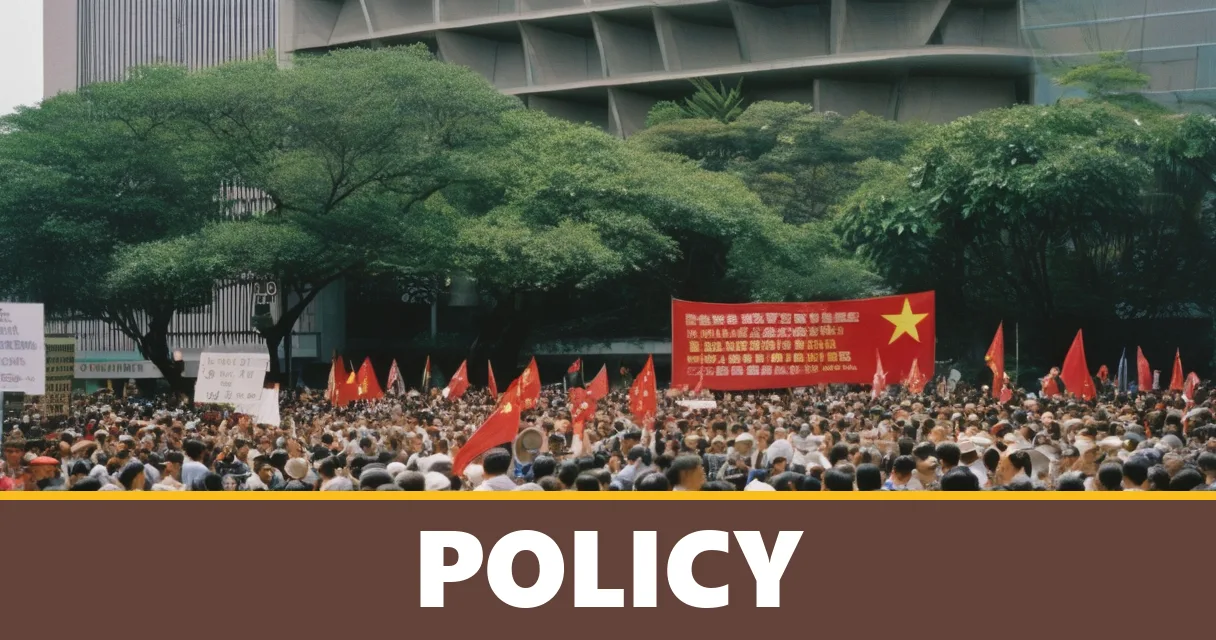
On November 14, a movement called Stop The AI Race organized simultaneous demonstrations in approximately 20 cities across five continents. The protests spanned North America, South America, Europe, Africa, and Oceania, marking the first globally coordinated action by the group. In San Francisco, roughly 150 people gathered outside the headquarters of OpenAI to chant against robot warfare.
The movement is specifically targeting the upcoming APEC summit in Shenzhen, where world leaders are scheduled to meet. Protesters are urging Donald Trump and Xi Jinping to use their planned interactions to negotiate a binding international treaty. This treaty would aim to restrict the development of AI systems that are more cognitively capable than humans.
The timing of these marches was intended to coincide with high-level diplomacy. While the summit focuses on trade and investment, the protesters want AI governance to be added to the agenda. The movement seeks to move beyond individual corporate appeals and focus on the superpowers that control the majority of frontier AI development.
The technical framework for safety
The formal proposal for this treaty was developed by the Machine Intelligence Research Institute's Technical Governance Team. It does not call for a permanent ban on all artificial intelligence. Instead, it seeks to halt the premature development of artificial superintelligence until specific risks identified in the proposal can be mitigated.
To enforce these restrictions, the proposal suggests a technical framework based on specific metrics. This includes setting FLOP thresholds, which measure the amount of computation used during the training of a model. By establishing these limits, the treaty would aim to prevent the creation of excessively large and powerful systems.
The proposal also includes a plan for verifying compliance with these rules. It suggests that authorities could track the distribution and use of AI chips. By monitoring the hardware required to train advanced models, the treaty would attempt to ensure that no nation or company bypasses the agreed-upon restrictions.
The prisoner's dilemma of AI
A central argument of the movement is that the AI industry faces a structural problem often described as a prisoner's dilemma. In this scenario, no single laboratory wants to slow down its own progress if they believe their competitors will continue at full speed. If one company stops, they fear their rivals will gain a dominant advantage.
Former software engineer Zack M. Davis explained this dynamic during the protests. He noted that if a company like Anthropic stopped alone, OpenAI could pull ahead. Similarly, if the United States stopped alone, China could potentially do the same. This competitive pressure makes it difficult for private entities to voluntarily limit their own capabilities.
Because of this dynamic, the movement has shifted its focus toward diplomatic channels. The goal is to create a situation where both superpowers agree to stop simultaneously. By targeting the bilateral relationship between the U.S. and China, the movement hopes to create a shared incentive to prioritize safety over a competitive race.
Current policy and political hurdles
The Trump administration has shown little interest in the type of binding treaty the protesters are demanding. The White House released an AI policy framework earlier this year that focuses on winning the global AI competition. This framework currently leaves almost no room for international restrictions that would limit the growth of the industry.
Furthermore, the administration's current posture on AI is fundamentally different from the movement's goals. The White House has pushed for child-safety provisions while simultaneously seeking to limit legal liability for AI developers. These positions prioritize the growth and protection of the industry rather than the international restrictions the protesters are seeking.
The movement's strategy represents a shift from previous efforts to influence the tech sector. A 2023 open letter calling for a pause on large AI experiments gathered over 33,000 signatures but did not result in verifiable policy changes at any major laboratory. The current protests represent a more direct appeal to heads of state to intervene in the technology race.
Looking toward the APEC summit
All eyes are now on the APEC summit in Shenzhen, scheduled for November 18–19. The summit provides a rare opportunity for Donald Trump and Xi Jinping to meet on the sidelines. This would be their third meeting of 2026, following previous discussions in May and September.
While U.S. and Chinese negotiators are currently focused on trade, chips, and rare earths, the protesters hope AI governance will be included. The movement is hoping that the leaders will arrive in Shenzhen with a concrete proposal on how to manage the risks of advanced AI. It remains unknown if either leader will take this specific demand seriously during the talks.
The movement's success depends on whether these leaders view AI safety as a priority comparable to nuclear war or pandemics. For now, the protesters have successfully coordinated a global message. They are waiting to see if the diplomatic atmosphere in Shenzhen will lead to a formal agreement on the future of artificial intelligence.
The move toward international law
The Stop The AI Race movement is drawing on concepts from safety researchers to frame its demands. Many banners used during the protests cited a 2025 book by Eliezer Yudkowsky and Nate Soares. The book's title has become an unofficial slogan for the movement, emphasizing the high stakes of the current technological trajectory.
Soares, who serves as the president of the Machine Intelligence Research Institute, attended the march in Washington, D.C. His involvement highlights the connection between academic safety research and street-level activism. The movement aims to translate these theoretical risks into actionable international law that can be enforced across borders.
By focusing on the two superpowers, the movement acknowledges that the geography of AI development is concentrated. If the U.S. and China can agree on a framework, it could set a standard for the rest of the world. The protesters are betting that the fear of a dangerous AI outcome will eventually outweigh the desire for technological dominance.
Corporate and public reactions
The CEOs of OpenAI, Anthropic, and Google DeepMind have recently signed a public statement regarding AI risks. They stated that mitigating the risk of extinction from AI should be a global priority. They compared these risks to other global threats, such as nuclear war and pandemics.
Despite this public statement, the Center for AI Safety noted that these companies continue to develop advanced systems. This discrepancy between public concern and private development is a major point of contention for the protesters. The movement argues that corporate statements are not enough to ensure safety without binding government action.
The protesters are highlighting this gap to show why their focus has shifted to the government. They argue that because companies are driven by competition, only a treaty between nations can provide a real solution. The movement hopes that the APEC summit will be the turning point where these concerns move from corporate statements to international policy.
Technical hurdles in treaty enforcement
One of the biggest challenges for any proposed treaty is the verification of compliance. The Machine Intelligence Research Institute suggests that tracking the hardware used for training is the most viable path. Because high-end AI chips are difficult to produce and distribute, they serve as a physical bottleneck for development.
By monitoring the flow of these chips, international bodies could theoretically identify which nations or companies are exceeding agreed-upon limits. This would move the focus from monitoring software—which can be easily hidden—to monitoring the physical infrastructure required to run it. This is a key component of the movement's technical framework.
However, implementing such a system would require significant cooperation between the U.S. and China. It would involve tracking exports and usage of hardware that are currently central to their respective economies. The protesters are asking the leaders to navigate these complex economic and security issues to reach a common goal of AI safety.
The role of the APEC summit
The APEC summit in Shenzhen serves as a critical backdrop for these demands. Because it involves major trade and investment discussions, it is a natural venue for high-level negotiations. The protesters are trying to insert AI safety into a conversation that is already about the future of the global economy.
The trilateral meeting between Trump, Xi, and Putin adds another layer of complexity to the summit. With three of the world's most powerful leaders meeting, the potential for a significant agreement is high. The protesters hope that the shared risk of AI will be seen as a common threat that requires a common solution.
While the outcome of the summit is not guaranteed, the coordinated protests have successfully put the issue on the international stage. By moving the conversation from Silicon Valley to the halls of government, the movement is testing whether the world's leaders are ready to act. The next few days in Shenzhen will determine if these demands have any chance of becoming reality.
The future of AI activism
The Stop The AI Race movement represents a new phase of AI activism that prioritizes geopolitics over corporate ethics. By focusing on the U.S.-China relationship, they are addressing the root of the competitive dynamic. This strategy acknowledges that the most powerful AI systems are currently being built by a very small number of actors.
If the APEC summit results in a treaty, it could provide a blueprint for how other nations approach AI governance. Even if no treaty is signed, the movement has succeeded in making AI safety a topic of diplomatic discussion. They have successfully linked the technical risks of superintelligence to the political realities of the current era.
The movement will likely continue to monitor the actions of the Trump administration and the Chinese government. They will be looking for any signs of cooperation on AI limits or hardware tracking. For the protesters, the goal is to ensure that the race to build more powerful AI does not outpace the world's ability to control it.
The impact on the tech industry
A binding treaty would have significant implications for the current trajectory of the AI industry. Companies like OpenAI and Anthropic would have to operate within specific limits on the size and capability of their models. This could slow the pace of development but would also provide a clearer regulatory environment for the future.
For developers, the move toward FLOP thresholds and chip tracking would mean more transparency in how models are trained. It would shift the focus from a 'winner-take-all' race to a more regulated environment where safety is a prerequisite for growth. This could potentially lead to more stable and predictable development cycles for the entire sector.
However, the industry may also see a divide between those who comply with the treaty and those who do not. The movement's goal is to ensure that everyone follows the same rules to prevent a 'race to the bottom.' By targeting the superpowers, they hope to create a global standard that makes it difficult for any single actor to gain an unfair advantage by ignoring safety.
The role of research in policy
The involvement of the Machine Intelligence Research Institute (MIRI) shows how academic research is driving the policy demands of the protesters. The movement is not just asking for a general pause; they are providing a specific technical framework for how to achieve it. This makes their demands more credible to policymakers who need actionable plans.
By using metrics like FLOP thresholds, the movement speaks the language of engineers and researchers. This helps bridge the gap between the abstract fear of 'superintelligence' and the practical reality of hardware and computation. It provides a way for governments to measure and enforce limits on the technology they are trying to regulate.
The move toward a technical framework also helps to depoliticize the conversation as much as possible. Instead of arguing about the morality of AI, the movement is arguing about the measurable limits of its development. This approach is designed to find common ground between nations that may disagree on many other issues but share a concern about the risks of uncontrolled AI growth.
Global diversity of the movement
The fact that protesters gathered in cities across four continents shows that AI safety is no longer just a Silicon Valley concern. It is a global issue that resonates with people in different cultural and political contexts. From Paris to Montreal to Berlin, the movement is finding supporters who share the same fears about the future of technology.
The diversity of the protests suggests that the risks associated with AI are viewed as universal. Whether it is the fear of robot warfare or the risk of extinction, these concerns transcend national borders. The movement is leveraging this global reach to put pressure on the world's most powerful leaders simultaneously.
This global coordination is a key strategy for the Stop The AI Race movement. By showing that there is a worldwide demand for an AI treaty, they are attempting to create a mandate for the leaders at the APEC summit. They want to show that the people of the world are asking for a safer path forward in the age of artificial intelligence.
The path to a binding agreement
The ultimate goal of the movement is a binding international agreement that can be enforced by global powers. This would require a level of cooperation between the U.S. and China that is rarely seen in other areas of diplomacy. It would involve sharing information on AI capabilities and agreeing on common safety standards.
For such an agreement to work, it would need to address the economic incentives that drive the current AI race. It would have to provide a way for both nations to feel secure in their relative positions while agreeing to limit the most dangerous capabilities of AI. This is the core challenge that the protesters are asking the leaders to solve in Shenzhen.
The movement's success will be measured by whether these high-level discussions lead to a formal treaty or a series of smaller, verifiable agreements. Even if a full treaty is not reached immediately, any move toward international cooperation on AI safety would be a significant step forward. The protests on November 14 were a clear signal that the public is watching and demanding action.
Summary of the protest goals
To summarize, the Stop The AI Race movement is calling for a specific set of actions during the APEC summit. They want Donald Trump and Xi Jinping to negotiate a treaty that halts the development of superintelligent AI. This treaty would use technical limits like FLOP thresholds and chip tracking to ensure compliance across both nations.
The movement's strategy is based on the idea that the AI race is a prisoner's dilemma that can only be solved by bilateral cooperation between superpowers. They are moving away from pressuring individual companies and instead focusing on the diplomatic relationship between the U.S. and China. This shift reflects the reality of who currently controls the most advanced AI technology.
The protests across five continents serve as a coordinated show of force to ensure these demands are heard. By timing the marches with the APEC summit, the movement is maximizing its visibility and influence. They are asking for a global priority on AI safety that matches the urgency of risks like pandemics and nuclear war.
The role of the APEC summit
The APEC summit in Shenzhen provides a unique platform for the leaders to discuss the future of global technology. Because the summit involves trade and investment, it is a logical place to discuss the infrastructure of the future, including AI. The protesters are hoping that the leaders will see AI safety as a necessary component of a stable and prosperous global economy.
The trilateral meeting between Trump, Xi, and Putin adds a layer of geopolitical significance to the summit. It brings together the leaders of the world's most powerful nations, making it an ideal venue for a high-stakes agreement on AI. The protesters are asking for a treaty that addresses the existential risks posed by the rapid advancement of these systems.
While the outcome of the summit is uncertain, the coordinated protests have successfully elevated the issue of AI safety to the international stage. The movement is waiting to see if the leaders will respond to the global demand for a treaty. Regardless of the immediate result, the movement has succeeded in making AI governance a key topic of international diplomacy.
The impact on the tech industry
A binding treaty would fundamentally change the way AI companies operate. It would mean that the size and capability of their models would be limited by international law rather than just by their own resources or goals. This could slow down the current pace of development but would also provide a more stable and predictable regulatory environment.
For companies like OpenAI and Anthropic, this could mean a shift in focus toward safer and more efficient ways to achieve their goals. It would move the industry away from a 'winner-take-all' race and toward a more regulated environment where safety is a prerequisite for growth. This could lead to more sustainable development cycles for the entire AI sector.
However, the treaty would also require significant cooperation between the U.S. and China. It would involve sharing information on AI capabilities and agreeing on common safety standards. The protesters hope that this cooperation will be seen as a necessary step to prevent a dangerous
Sources and links
- OfficialMIRI's president intelligence.org
- OfficialMIRI's proposal explains techgov.intelligence.org
- ReportingLatin Times: the article we sourced
Liked it? Say why
Add a line for other readers.
No account needed. We never show your email. Comments with links, ads or abuse are held and not shown. Your comment shows after a quick check.
Listen to the AI Wire headlines
Listen to the AI WireListen to our daily AI shows every morning: on your commute, in the shower, wherever you are
Listen to the daily showsFirst reported by Latin Times · Read the original. Written by the SI Agent News Desk from the reporting above.Written with AI from the source above. Every number is checked against the source. Spot a mistake? Corrections.